
Brave?

I survived my first speaking gig, and I think it went well. People asked a lot of good questions afterward and I sold a couple of books. But there’s something I’m going to have to get used to, and that’s being thanked for telling my story.

Usually, when I share my story, it’s to a group of people who have had similar issues, or at least one of them. Or I’m writing it, which can be seen by anyone but it’s not so personal. But this was my first experience of people coming up to me and throwing around words like “brave” and “courage.”

I don’t feel as if I’m being brave. To me, being brave means doing something scary, and putting my story out there is something I’ve done so much now that it’s not scary. Maybe it was brave in the beginning? I don’t know. But I’ll try to take such words in the spirit intended, because it doesn’t feel good to people to have their compliments brushed off.

And I’ll gladly take the thanks, because what I’m trying to do when I speak is intended to be of service, and a thank you means that I succeeded in some way.
Welcome!

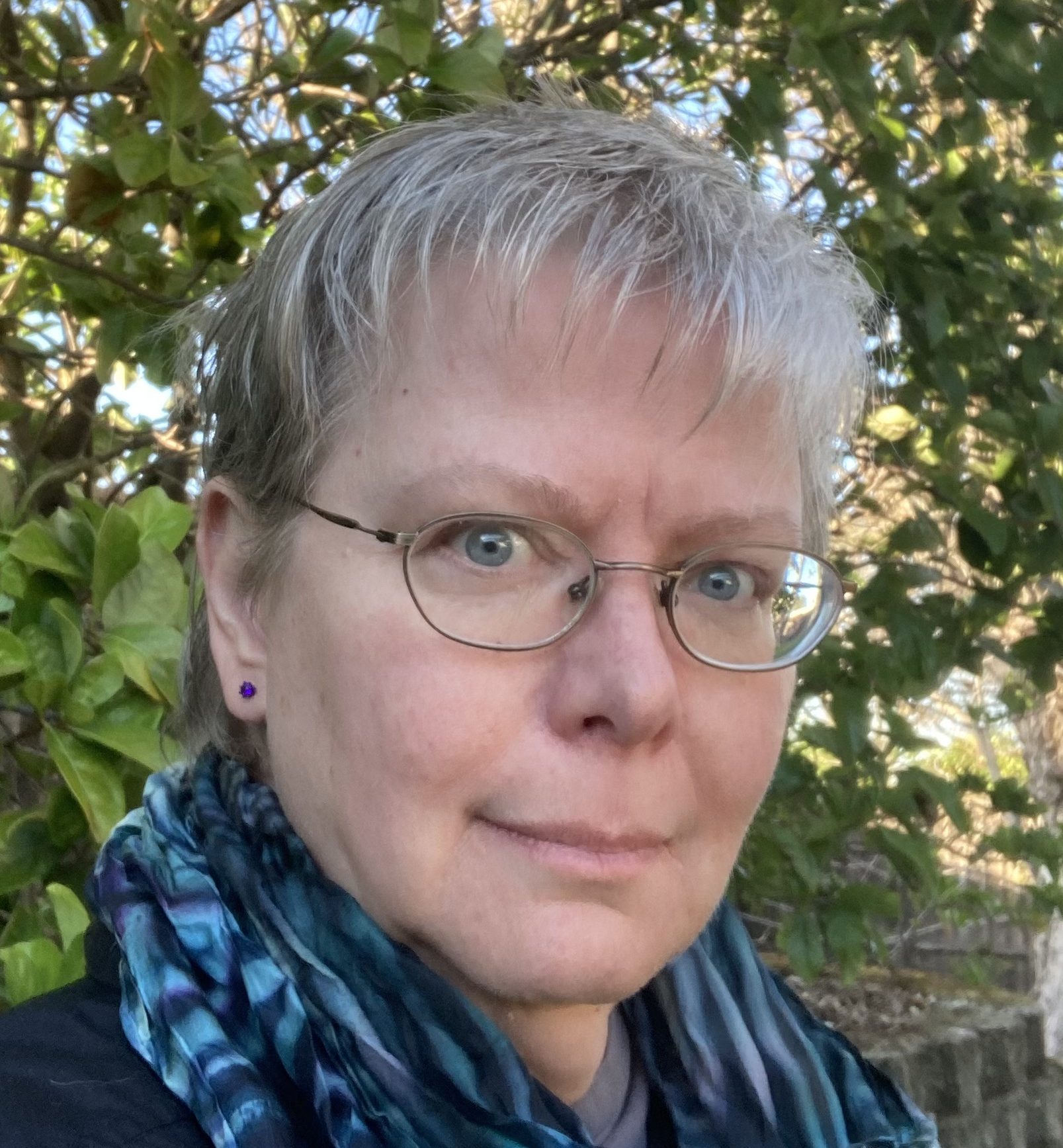
I’m Lori Lynne Armstrong, writer, poet, scientist, former counselor, recovering drug addict, mother, person with bipolar disorder, science fiction geek, and a bunch of other things. The order in which all of these manifest varies wildly. I’ve written two books so far and plan many more. I almost wrote no books, because I almost died back before getting clean in 2011. Today I manage my conditions as responsibly as I can and write in ways that try to reach out to others and reduce stigma and shame.

Scroll down through the blog to see snippets of my life as I navigate the maze of writing and living in a complicated mental and emotional landscape. I like to share my process to make others feel less alone.

And click on the links below to access my books on Amazon and Kindle! They’re very good. I hope something in them makes you feel more seen or see others in a new light. I think it will.

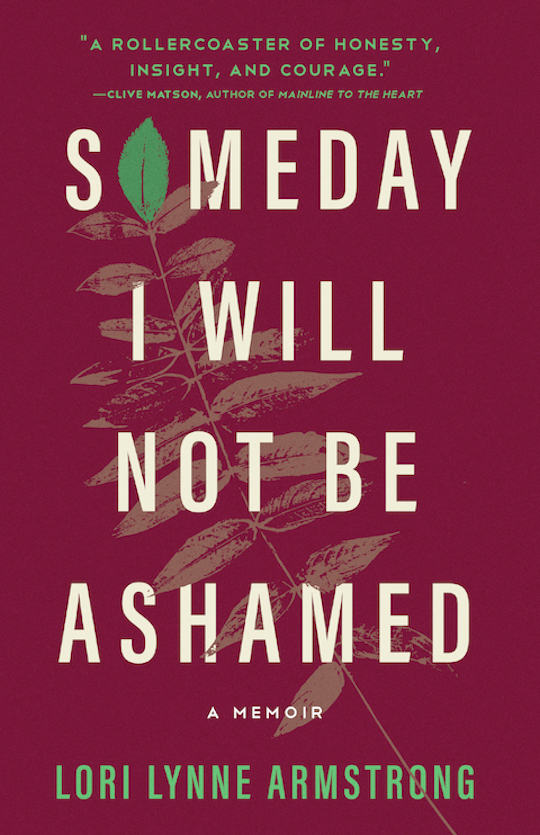
Someday I Will Not Be Ashamed: A Memoir

My story of a self-destructive quest for perfection that led me from aspiring scientist to opioid addict, from the halls of M.I.T. to the corridors of the psych ward, from therapist-in-training to a therapist’s problem patient, and, at last, beyond shame to an unlikely self-acceptance.

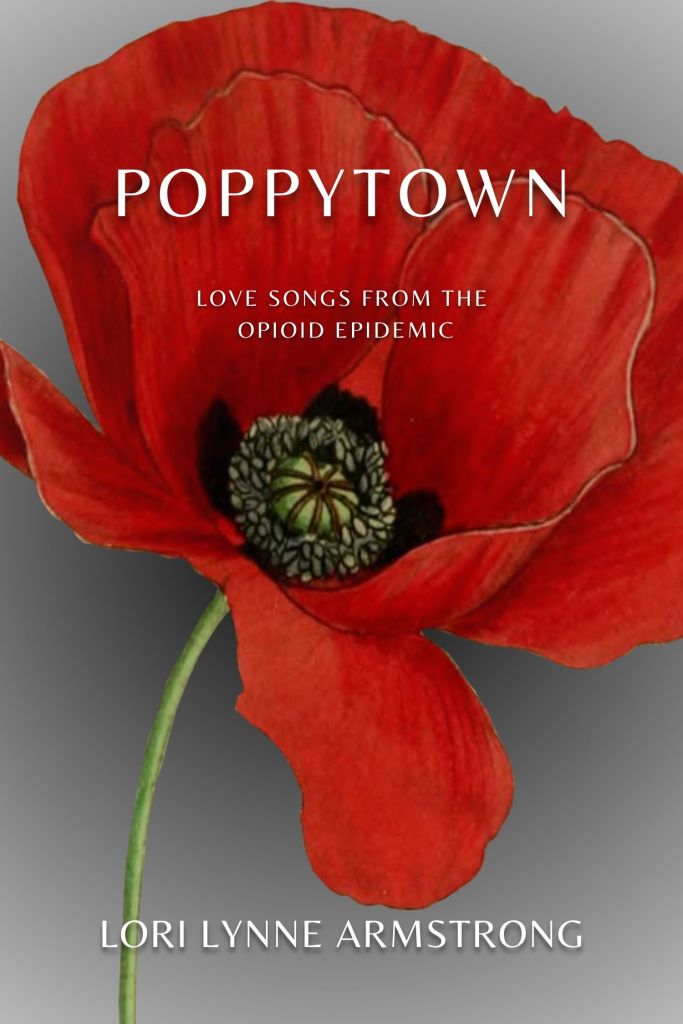
Poppytown: Love Songs from the Opioid Epidemic

This unique poetry storybook dives into the impact of addiction on all of us. It includes voices from addicts in all stages of illness and recovery, but also the voices of parents, children, partners, and professionals who try to help.

Show and Tell

I got to show my book to in-the-flesh other writers this weekend! As part of my effort to get less isolated, I went to a new members’ gathering of the writing club I recently joined. It was awesome. My social awkwardness was almost absent–it probably helped that we all could assume ourselves to have something in common. There didn’t have to be any awkward small talk; every conversation began with “So, what do you write?”

I brought a copy of my book, of course, and so did other people who have published, whether independently or not. It was fun to see theirs and exchange information about covers, formatting, and the other things we had been through. Although I would have felt equally welcome if I hadn’t had a book yet, I loved having it to show. I was like a happy kindergartener who had the perfect thing to bring in for Show and Tell (is that still a thing? I hope so).

It helped remind me of why I wanted the book finished and available; I wanted to be able to say “Oh, you want to know more about where I’m coming from? Here’s where you can find it.”

Of course, after having so many conversations, I was beyond overstimulated and spent a sleepless night, crashing the next day. To be expected. But I’m really excited about future interactions with the group. I’ve seen in the past that great things can happen when I reach out; I never know when one decision will bear surprise fruit.

The Sane One

I don’t think my mom’s doctors, nurses, surgical staff, etc. know that I’m a bipolar drug addict in recovery (albeit 12 years clean). Because I’m the one dealing with them, answering questions, soothing my mom into compliance, and making sure instructions are written down. I’m the sane one. And it’s weird.

Being able to help my parents is a great privilege. It’s the natural order of things, and as someone who used to pilfer painkillers from my mom’s purse, it feels good to instead be doing the normal things a child does for an aging parent. It feels good to be useful. That being said…I hate this.

Being the sane one means that I have to fear a bad episode more than usual–what if one happens right when my mom has to have surgery or something? Mental health aside, what if my back just goes out and I can’t hack it physically? The driving alone is causing pain. Unfortunately, she and her husband refuse to discuss options for other care.

It seems almost inevitable that something will happen. Will it be a back episode so severe that I can’t walk or drive? Will it be a bipolar episode so severe that I gaze at the doctors with a “deer in headlights” expression, unable to communicate or process information? Who appointed me the functional one, and what were they thinking?

In the meantime, I will do my best. And maybe (gasp) reach out for some ideas and support from others experienced in elder care issues. Because I’m soooooo good at asking for help.

I’m Alive! Now What?

I’ve been depressed. Seriously depressed. Couldn’t write, couldn’t bring myself to be on social media, couldn’t bear to pop into my account and confirm that my book’s not selling. Family members had some medical stuff lately, and doing the necessary left me with zero strength for anything else.

As a neurodivergent writer, this is one of the challenges to a creative life. How do I dip my toe back into writing without getting overwhelmed with embarrassment or shame at having been absent? The presence of these episodes for me is one of the reasons I chose independent publishing; I wanted a lifestyle where gaps in productivity wouldn’t hurt anyone but myself.

So here I am, with my book swallowed by the Amazon algorithm, which is to be expected. No one’s going to buy it if they don’t know about it, and no one’s going to know about it unless I carry out some of my plans for promotion. One tiny step at a time, I need to work on this, and work on my upcoming projects. And keep from comparing myself to other authors.

Yeah, right. But I went to a poetry reading yesterday, and I joined a local writers’ club. That’s something.

Another Step Toward Reality

The book cover for Someday I Will Not Be Ashamed is done. DONE. All the revisions and changes and nitpicking, all the asking for blurbs and deciding which to use, all the coming up with the right synopsis, bio, and author photo, all the realizing that my painstakingly chosen back cover text needs to be slashed by more than half…it’s all done. The front, spine, and back of the print cover are done. The ebook, of course, only uses the front, so a lot of this sweat has been about the print version.

So where am I now? Finishing up the formatting…I confess, I caved and bought Atticus to help me. When that’s done, it will be time to upload the print manuscript to the Amazon publishing platform (KDP). The usual way of doing it is to upload the print manuscript, order a proof copy to inspect, then take the print book live the same day you upload the ebook.

So a time will come, not long from now, when I announce my launch date. It’s getting more real all the time.

It’s Raining in My Head

As a Californian, I am contractually obligated to be grateful for every precious drop of rain that falls. And I am. But as my region deals with huge rainfall and flooding, it can be challenging. And the varying pressure triggers my back pain. More seriously, it triggers spikes in my daughter’s chronic migraines. And I can’t go out. And the dog wants to go out every 20 minutes, and she can’t understand why we don’t turn the rain off, and we have to put on her doggie raincoat and leash her and take her out each time because there’s a giant puddle in back, and it’s all a giant hassle. And it’s dark.

I know I’m too sensitive to my emotional environment sometimes. The more down those around me feel, the worse I feel. It’s hard right now to get excited about publication tasks, especially since I was already feeling a bit overwhelmed. A heavy depressive fog has settled over me. I’m always cold. The silence required by my daughter’s headaches is oppressive (there is only so long I can tolerate headphones without needing a break).

Here’s the part where I introduce a clever metaphor and link all this to the general experience of living with one of my conditions. But I haven’t got one today. It’s raining in my head, and I have to wait it out. I have to remember all the things I’ve been excited about, even if I can’t feel the excitement right now. It will come back. It always does.

A Is For Acceptance

I used to think acceptance was the coward’s way out. It would be wrong for me to accept my conditions or their limitations, because that would mean I was giving up instead of fighting, fighting all the time, fighting to create a “normal” life like all the inspirational stories out there tell us a disabled person is supposed to do.

The culture I live in glorifies fighting. When a person develops cancer, their process is framed as a battle. Their perceived job is to fight–and if the cancer proves to be terminal, the battle is lost. Death is framed as a failure. For millions like me, life with compromises is seen as a failure. Accepting that I cannot work full-time, or spend too long in certain environments, means stepping away from the meritocracy and accepting a role of someone who’s not in the race.

Settling into a regimen of care that doesn’t fix everything but has been sustainable for years is seen as a failure. I’m supposed to be trying things, constantly seeking alternative treatments, and spending my life in an endless search for a cure instead of living it.

Of course, there’s a balance needed between accepting and fighting. There are many battles to fight every day. If a heavy depression has kept me from washing my hair for days, accepting my greasy locks and itchy scalp isn’t the best choice. Better to fight the inertia, if I can, and drag myself to the shower. Ditto for hundreds of other arenas where I take on my demons to win the prize of some meaningful action.

But accepting myself, in general–accepting that I have the life I do–is key, no matter what it costs.

Where the Hell Have I Been?

…one might ask. Well, I’ve been writing like hell.

Just not here. Part of my brain seems to think writing sections of my book, or writing new poetry, means there is no time or juice left for updating this site. And that’s bullshit. It’s not as if doing a post takes me a long time; it just takes the willingness to sit down and write something about what’s going on in my head or my life right now.

The hardest part is picking out a subject from the thousands of possible ones. I’m seriously considering getting a jar with scraps of paper and pulling out a random one every day.

I’ve also been house hunting and moving. Yes, after seven years, my family is living in a house again. It’s not really any bigger than the apartment, but it has a little yard for the dog…and a room that has a corner that’s MINE with a DESK in it that belongs to ME and NOBODY else can put so much as a PENCIL on it or I will SMITE them like an Old Testament plague.

*insert maniacal laughter*

Too Little, Too Late

The phrase haunts me. Whenever I find a lump where a lump shouldn’t be, or even have a twinge of pain in an unfamiliar place, the fear comes up. I’m turning into a hypochondriac, and I don’t like it.

It’s not just that I am afraid of dying, although I am. It’s that part of me is still waiting for a judgment from the universe–a judgment saying I’ve had enough second chances. A judgment saying my current efforts are too little, too late.

I recently spent time with a fellow addict who is on dialysis. For three years, she tried to quit smoking in order to get on the list for a kidney transplant and could not do it. She finally succeeded—two months before a heart complication showed up and derailed the whole process. Too little, too late.

My blood sugars are lower than they’ve been in a long time–but with every exam I fear the onset of some complication born during the less controlled times. My weight is improving slowly from the place it reached last year–but with every sore knee or backache I fear that I’ll never dance again.

It all feeds into the roar from the ever-present peanut gallery that observes my efforts at writing: You’re too old! It’s too late! There’s not enough time left to accomplish anything that is worth doing!

Show and Tell

Here’s the greatest benefit I am receiving from starting to attend actual live poetry events and read my own work: When I know I am going somewhere like this, I get like a kindergartener on Show and Tell Day.

I want to bring something new, if I can. I want to bring something I’ll enjoy sharing. If I have a partial draft that’s been in limbo, I get inspired to sit down with it and see if I can whip it into readable shape. If I have a piece that exists but has never been read to an audience, I get inspired to polish anything that might improve its readability.

It’s wonderful for breaking me out of physical, mental or emotional inertia. Right now I’m about to tackle revising an old draft that has been untouched for nearly a year. I’ve been vaguely dissatisfied with it the whole time, but never dug back in…but for some reason, I want to read it tonight.

Sudden Ease

Two days ago, over a bowl of oatmeal, I was ambushed by a poem. The seed of it had appeared the day before, and was suddenly mushrooming into near-draft form. Obediently, my half-awake self reached for a pen and wrote things down. In half an hour flat, I had something better than the things I’d been staring at sporadically for two weeks.

“You will find that you may write and rewrite a poem and it never seems quite right. Then a much better poem may come rather fast and you wonder why you bothered with all that work on the earlier poem. Actually, the hard work you do on one poem is put in on all poems. The hard work on the first poem is responsible for the sudden ease of the second.”
—Richard Hugo, from The Triggering Town

If I were reading this in a church, this would be the time to shout “Amen!”

I have thought about abandoning a poem when it feels awkward or stuck…and sometimes I do put it aside for a while. This passage affirms what I think I already knew: working on a poem is never wasted time, even if that version of that poem isn’t destined to become a star. The work of the past two weeks bore an unexpected fruit, that’s all.

Think Small

“Think small. If you have a big mind, that will show itself.”
Richard Hugo

The above quote comes from my latest acquisition in the “poets writing about being a poet” genre. It’s called The Triggering Town: Lectures and essays on poets and writing. I recommend it highly; there are some sections that caused me to get out my highlighter because yes, that phrase, I want to remember that one. I could write a post about each of those phrases, and I might.

So what does he mean when he writes “think small?” He’s talking about how some of the best poems come from a small triggering subject as opposed to tackling a huge, monolithic  one. A small, finite experience or image is used as a starting point, and the mind expands from there.

It makes sense to me. What scenario sounds as it if will lead to a better poem? A poet sitting down saying “I’m going to write a poem about Death now” or a poet musing about the birdsong that distracted them during their grandfather’s burial?

The advice to “think small” is helping me in other ways right now. I’ve been to several poetry readings and open mics lately, following up that first experience, and it’s having a Pandora’s-box-like effect on my feelings about poetry and my generation of new poem ideas. It is very easy for me to get overwhelmed, especially since I now realize there is more going on in my local poetry scene than I could ever have the time or strength to attend.

Think small. What event am I going to next (and for God’s sake, don’t overcommit yourself!) What am I going to read there? Is it ready?

Winning Formula

There’s no one way to stimulate creativity. For me, the seeds of a new poem can come at the oddest times. One thing I’ve noticed, however, is the role played by boredom, fatigue, or concentrating on a task like driving or dishes. A mental state in which thoughts drift randomly and hook up in unexpected ways.

Recently, I had the most glaring example of this…it was the night before my father-in-law died, and I was up at the family’s home being with them in their vigil. We were all catching bits of sleep where we could, in between listening to his breathing. I lay in a trundle bed, stupidly tired, and could not fall asleep. I listened to some music on my headphones, tried again; still no dice.

My mind began to wander, and BAM! the seed of a new poem appeared. Was it a poem about death, or grief, or what it’s like waiting for it this way? No. The poem is (as far as I can tell at this stage) completely unrelated to what was going on. The trigger appears to have been a phrase in a poem I’d read the day before, linked to a different poem I’d been working on, linked to a song I had heard…you get the idea. These things drifted through my fatigue-drugged mind and collided.

And it wasn’t just an idea, it was an idea. One of those juicy ones that gives you a little shiver when it clicks into place.

Those who speak of the drawbacks of technology, or those who caution against the overscheduling of children’s lives, understand that we all need time to daydream. Boredom and random mental drifting are vital to imagination. I know that I interfere with my creativity when I distract myself from insomnia with my iPad instead of just letting myself drift, although I forgive myself because it’s the least of evils at times.